
Ask someone why they haven't started exercising, eating healthier, or managing stress more effectively, and you'll often hear the same answer: "I just need to get motivated."
It's an understandable belief. But it's probably backwards.
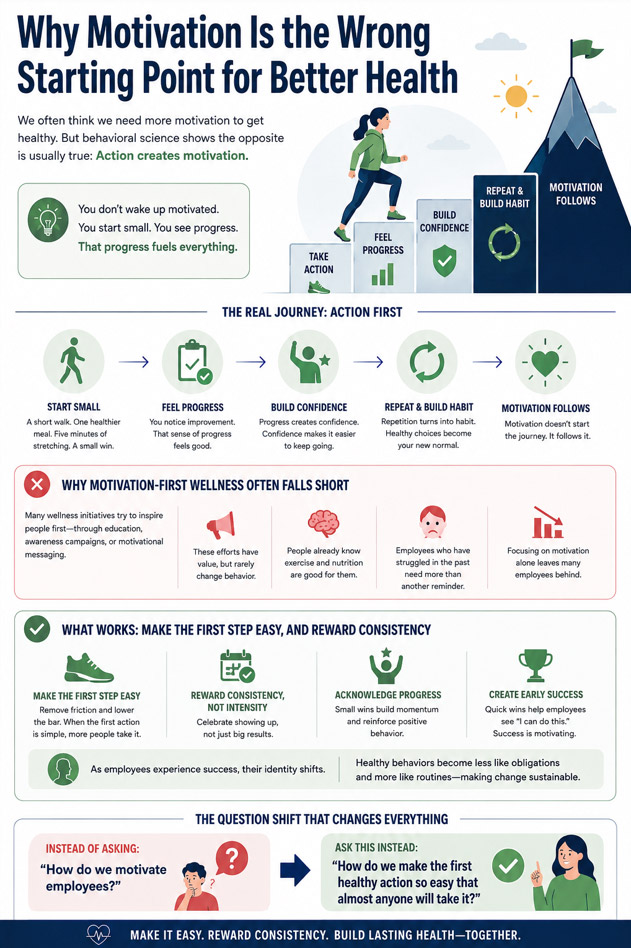
Many wellness programs are built around the assumption that people first become motivated. And then take action. Behavioral science suggests the opposite is often true. Action creates motivation.
Think about any meaningful healthy habit you've developed. You probably didn't wake up one morning overflowing with enthusiasm. You started with something manageable. A short walk. One healthier meal. Five minutes of stretching. A small accomplishment.
You felt progress. That progress created confidence. Confidence encouraged repetition. Repetition eventually became habit. Motivation didn't start the journey. It followed it.
This distinction has major implications for organizations trying to improve employee health. Too often, wellness initiatives focus on inspiring employees through education, awareness campaigns, or motivational messaging. These efforts have value, rarely change behavior—particularly among employees who have struggled to stay engaged in the past.
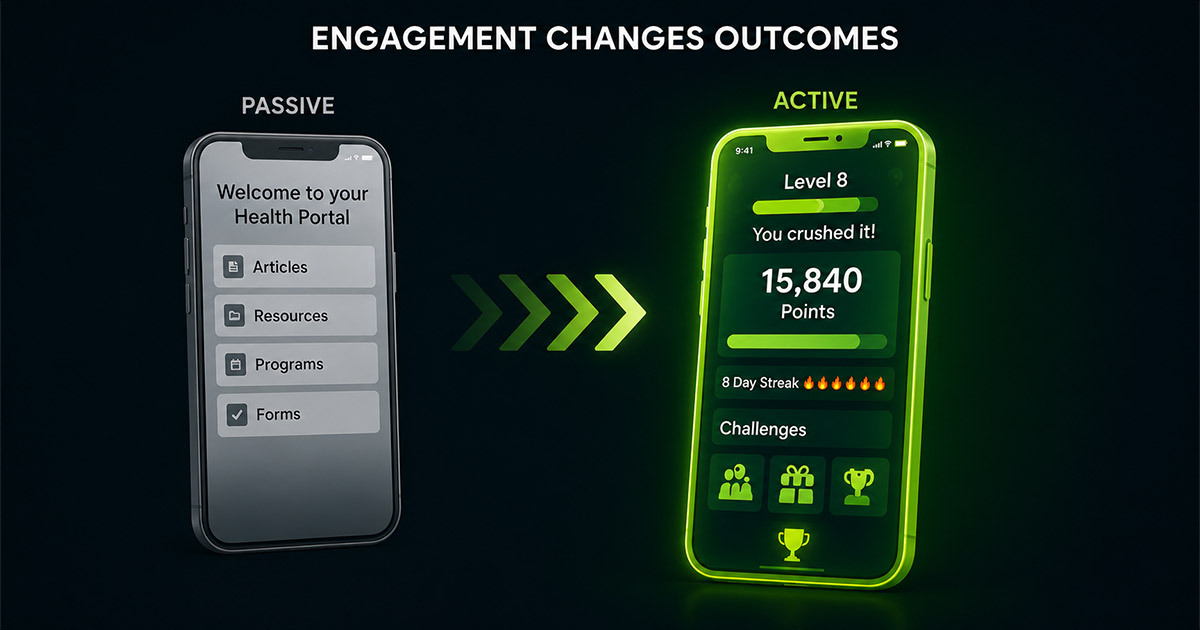
People don't need another reminder that exercise or proper nutrition is good for them. They need an easier first step. The most effective engagement strategies reward consistency instead of intensity. They acknowledge progress instead of demanding perfection. Most importantly, they help people experience success quickly. Because success is motivating.
When employees begin seeing themselves as people who can consistently make healthier choices (even very small ones) their identity begins to shift. Healthy behaviors become less like obligations and more like routines. That's when meaningful change becomes sustainable.
Organizations seeking better wellness outcomes should ask a different question. Instead of asking: "How do we motivate employees?" Ask: "How do we make the first healthy action so easy that almost anyone will take it?" That subtle shift changes everything.